
Your skin.Your senses.Your element.
Explore six base fragrances and your skin observations. An at-home scent study, at your own pace.
Try the demo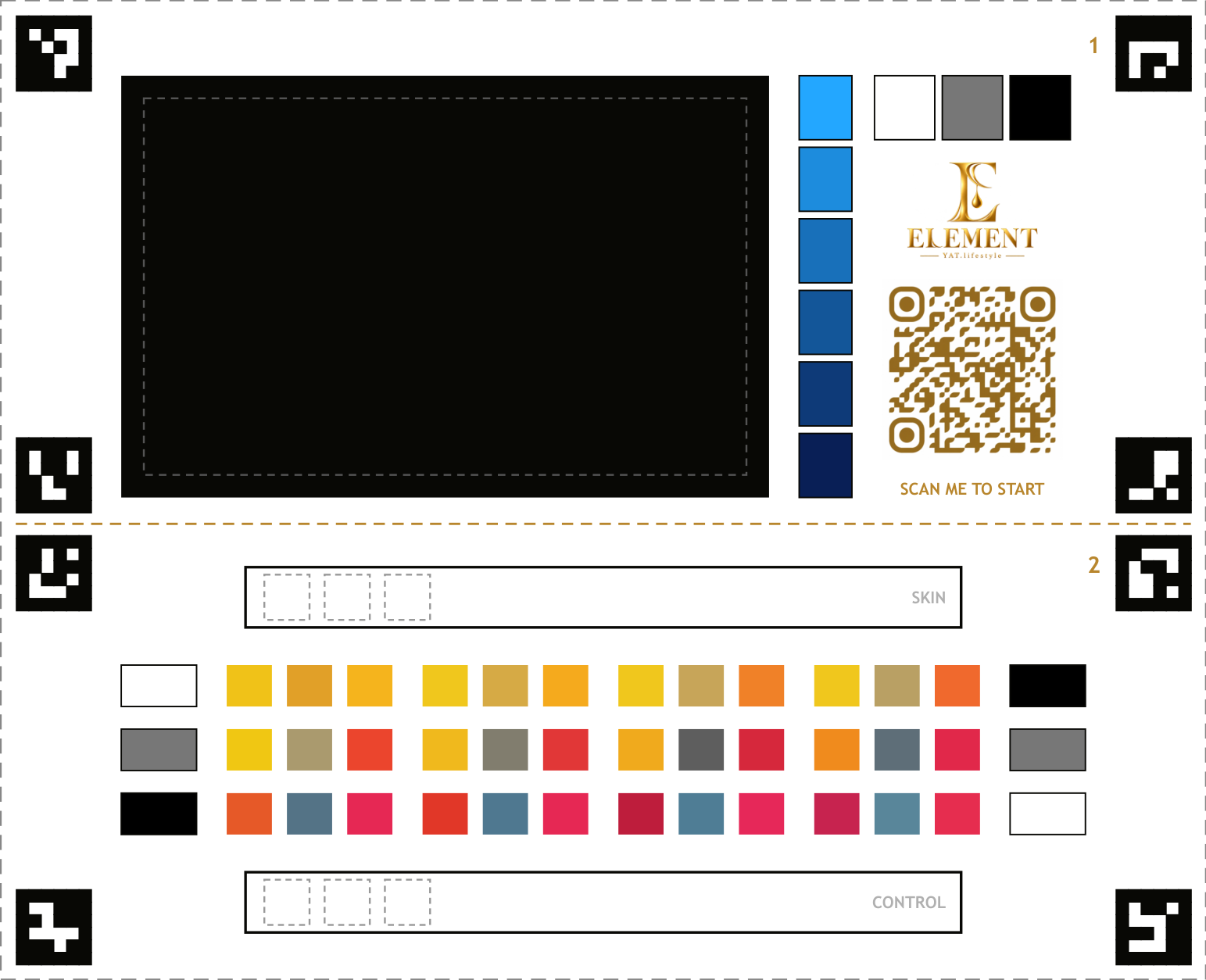

Scroll to follow the drop
Illustrated journey. Follow the demo for test instructions.
Explore the journeyTen sprays in, everything smells good.
A busy counter tells you little about how a scent feels on your skin, in your day. Take your time at home. Compare blind. Keep the notes that feel like you.
At your own pace · About 30 minutesHow it works
Hackathon prototype. Measurements and sample formulas are exploratory.
- 01
Test at home
About 30 minutes. Blot, record pH, take lid photos, pause between smells and choose among six blind bases.
- 02
AI reads you
Photo readings, scent ratings and routine tags inform bounded tuning rules. pH is recorded but never changes the formula.
- 03
Your bottle
A tuned version of the base you chose, with a reason for each change. A perfumer reviews every formula before mixing.
Every detail has a place.
The lid becomes a measurement board: zone 1 for the blot, zone 2 for skin and control strips.
Select a detail to explore the board.The large black field holds the blotting sheet. Its dry border is a reference for the photograph; the blue patches and neutral swatches help the reader check colour.
Read the evidence [36] ↗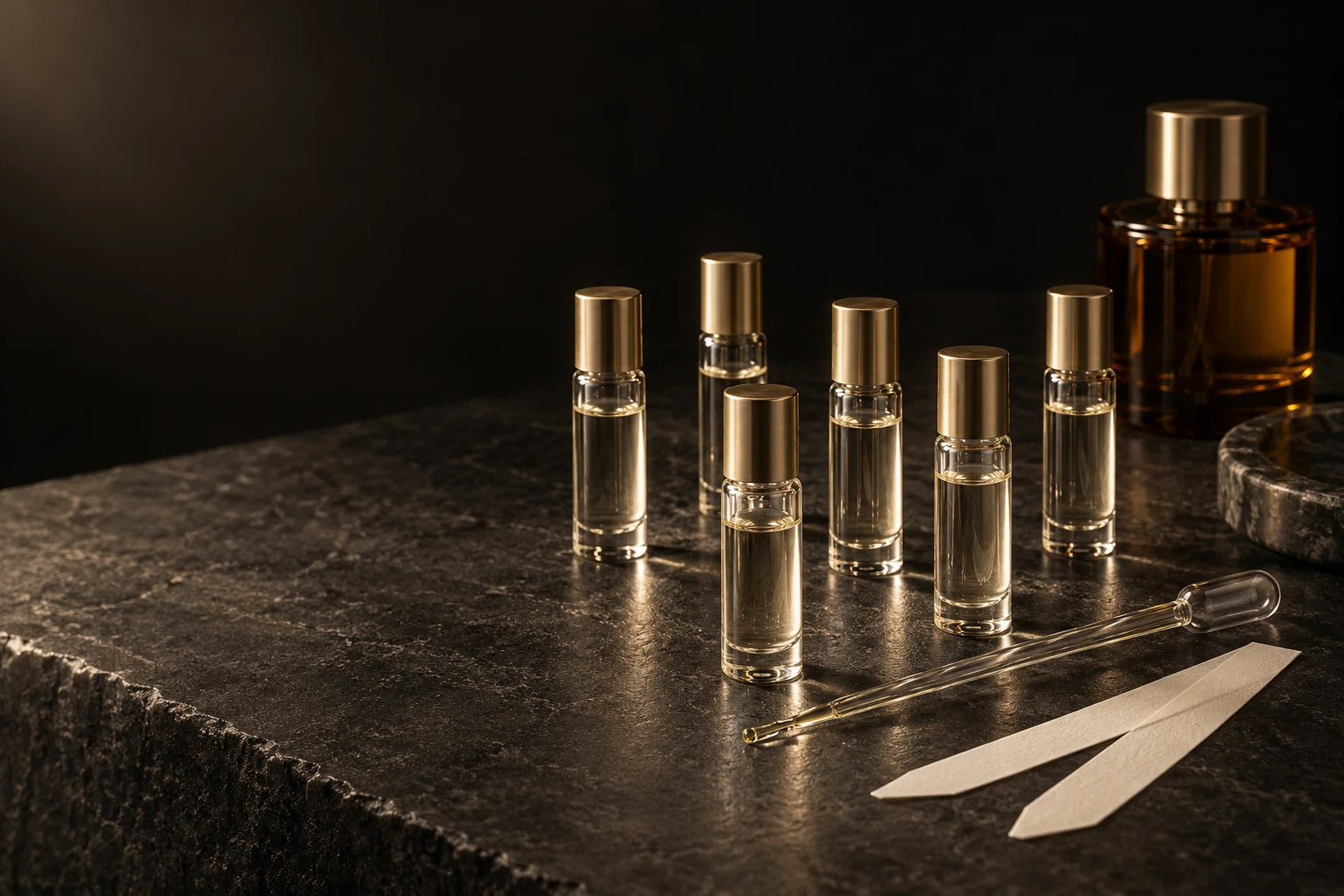
A little lab. A lot to notice.
- 01Six blind base samples, A–F
- 02Four sensitivity vials, including a blank
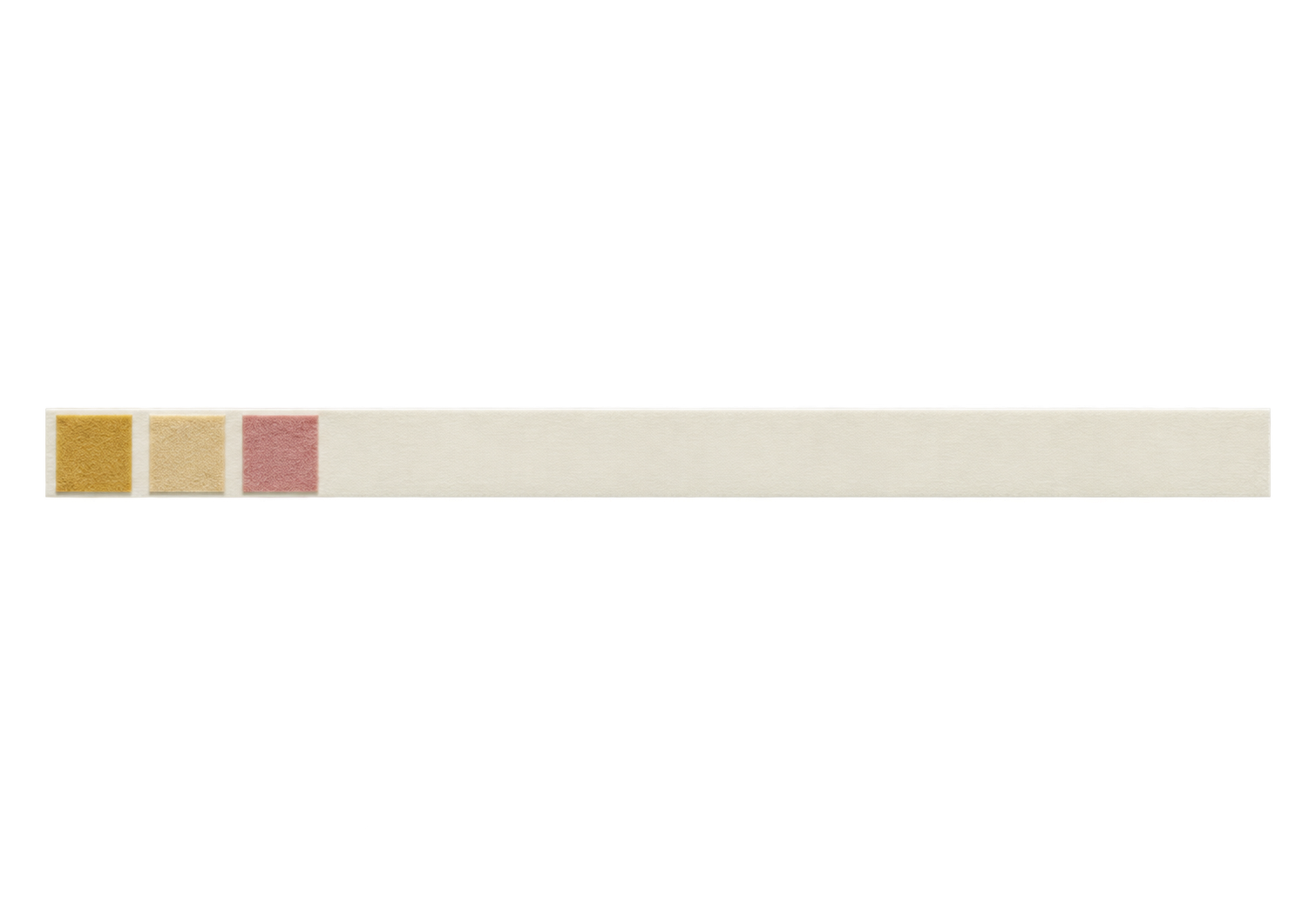
- 03Blotting sheets, pH strips and control
- 04Scent strips and tweezers
- 05Printed lid board with photo markers
Six starting points. Yours to explore.
Working names. Sample formulas, subject to perfumer review.
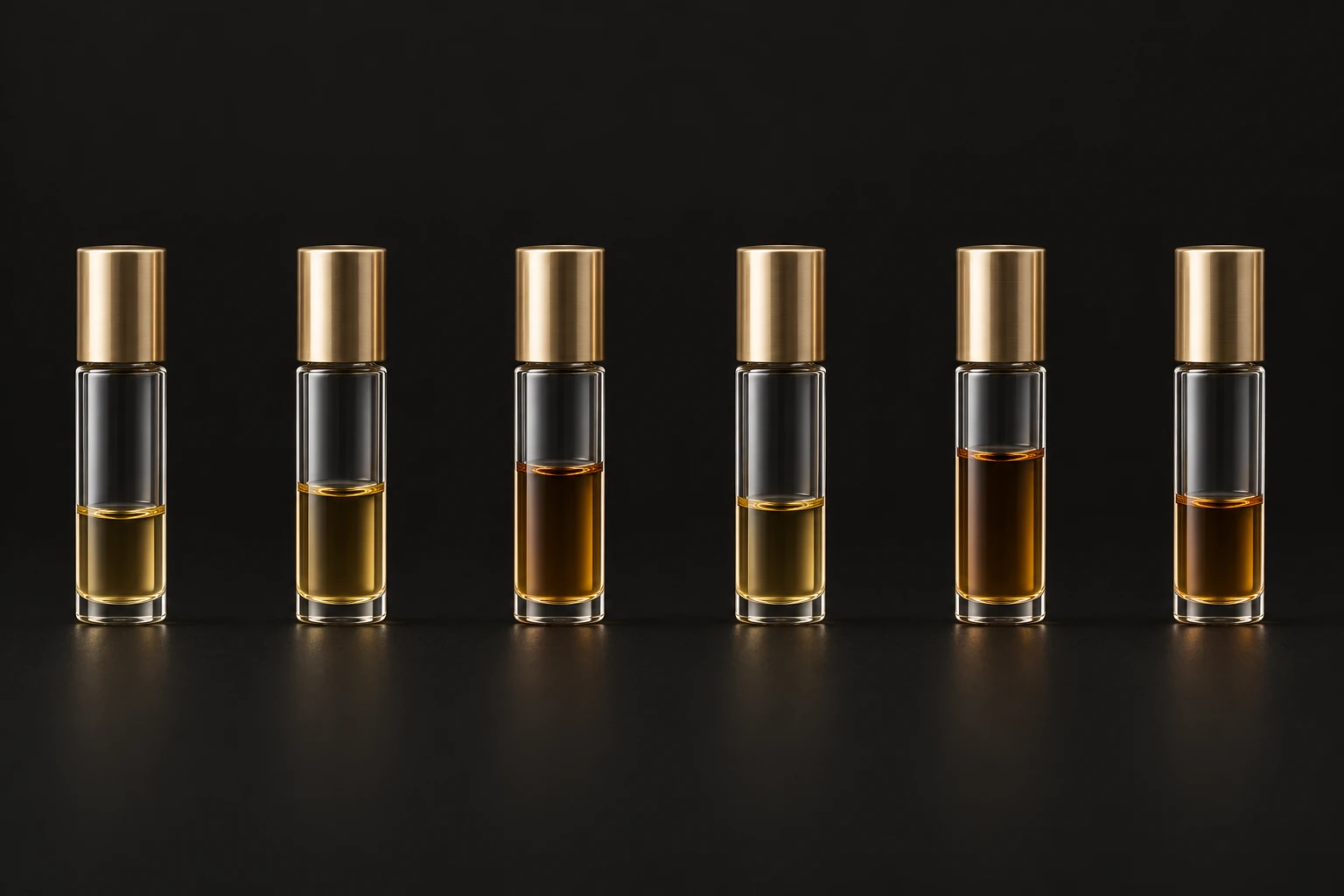
Afterimage · Tea
Afterimage · Harbour
Hours · Noon
Afterimage · Forest
Hours · Night
Concept study · Generated illustration
Names shown here; letters are randomised in each kit for blind testing.
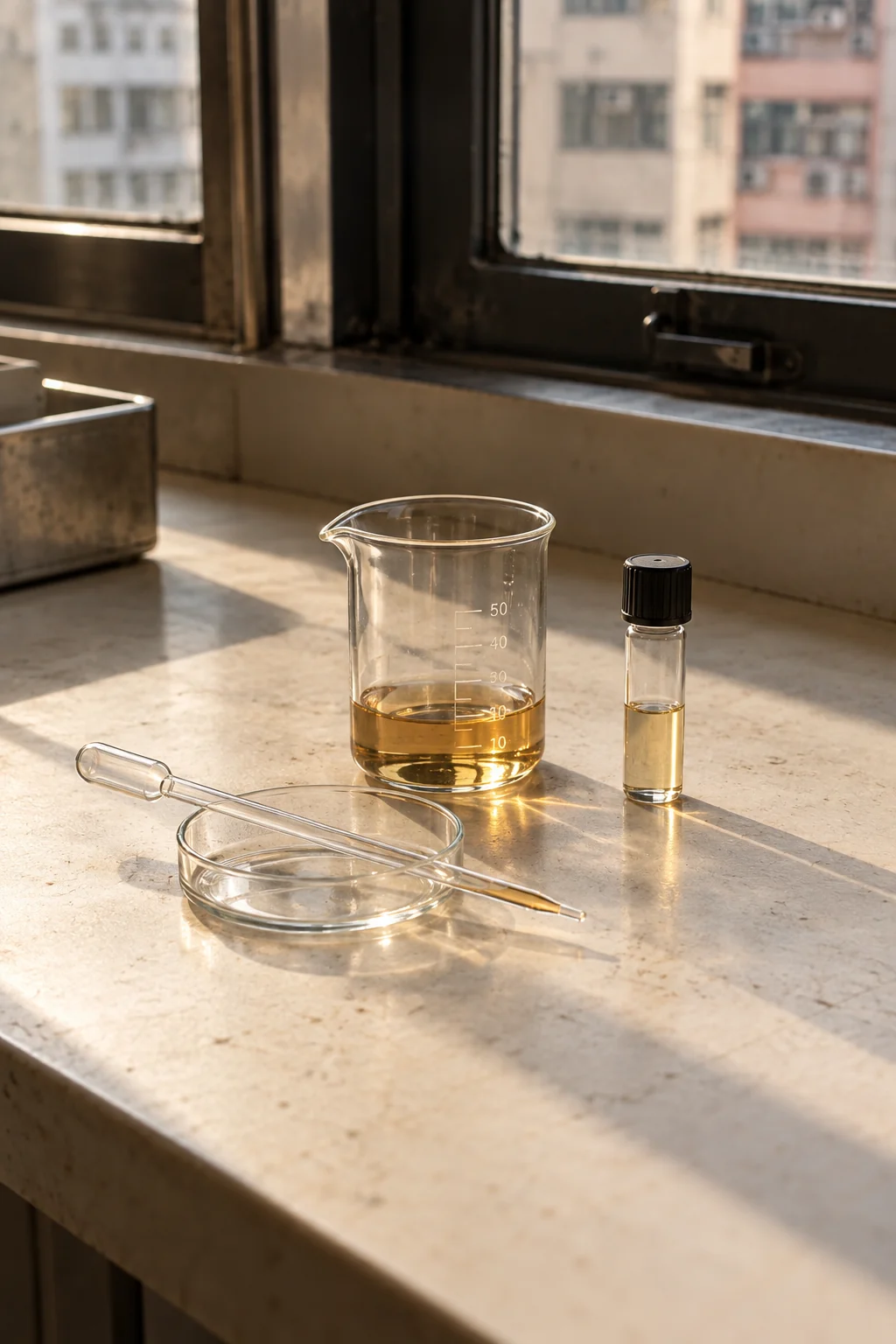
Your nose has a point of view.
Scent connects with emotion and memory networks. Receptor function varies between people. That gives us a reason to ask what you smell, rather than assume everyone smells the same.
The scienceA scent, with reasons.
Your base stays recognisable. Oil readings suggest tier balance; sensitivity suggests concentration; your routine and preferences suggest accents. The language model explains the calculated changes. It does not write the formula.
Photo readings, scent ratings and routine tags inform bounded tuning rules. pH is recorded but never changes the formula.
The AIRead the evidence [36] ↗Your scent, in three layers.
- OpeningThe first impression
- HeartThe fragrance's character
- Dry-downThe lasting trail
Small, bounded adjustmentsYour ratings + observations guide the suggestion.
AI explains. Perfumer review before blending.
A pause. No magic beans.
Pause between samples: 5 seconds for the intensity vials and 15 seconds for the blind bases. Breathe normally in unscented air. Recovery varies; a timer cannot guarantee a reset. In the sample demo, you can skip the pause to explore the flow.
Choose your way in.
Indicative prototype pricing · Orders are not open
Lab kit + tuned 50 ml bottle
HK$988
The at-home tests and a tuned bottle, with perfumer review.
Join the launch waitlistDiscovery kit
HK$188
Explore the six base samples at your own pace.
Join the launch waitlistOrder links open the launch waitlist. Payment and fulfilment are not available here. Hong Kong delivery is planned; carrier acceptance remains to be confirmed.
Good questions. Honest answers.
Not a medical or diagnostic device.
Does the kit prove a better perfume match?
Not yet. We need measurement-agreement tests and blind comparisons against recommendations based on a quiz. This is an exploratory prototype. Read the evidence [36] ↗
Does pH change my formula?
No. We record it as context. Evidence is too weak to use pH for formula tuning. Read the evidence [36] ↗
Can I try without a kit?
Yes. The demo offers sample readings and simulated smell answers. They are examples, not measurements of you. Read the evidence [36] ↗
Is this a health test?
Not a medical or diagnostic device. It does not identify your genes, diagnose smell loss or assess skin health. Read the evidence [5] ↗
Lab notes
See the method, the evidence and the limits behind Element.
Your next scent starts with you.
Hackathon prototype. Measurements and sample formulas are exploratory.